

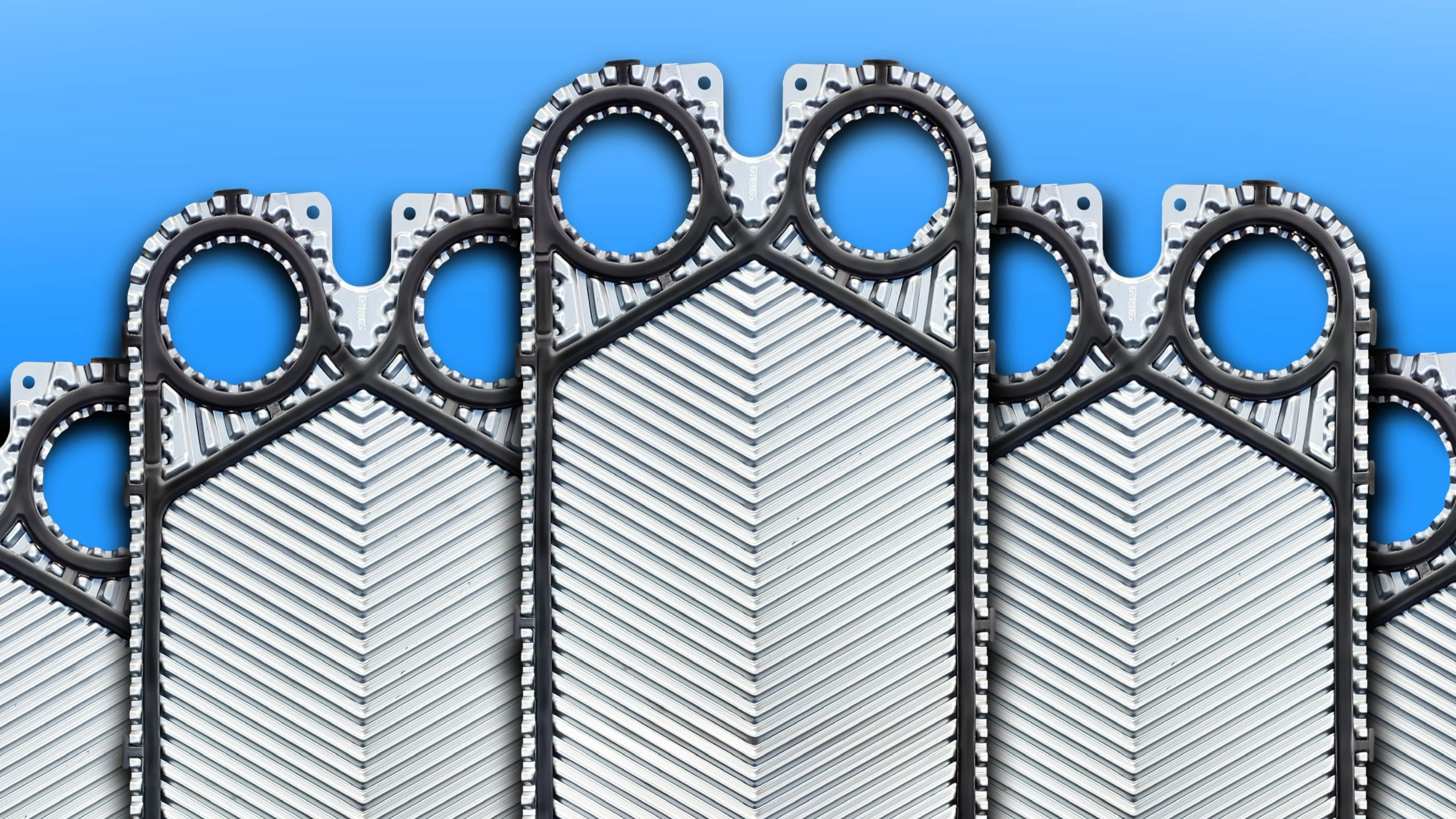
How a heat exchanger works
A heating system with district heating consists of two separate circuits. One circuit is on the primary side from the district heating supplier and the other circuit is on the secondary side which is the property's system.
These two circuits meet in a heat exchanger made of thin plates of thermally conductive metal. The heat transfer takes place when the water from the primary side passes on one side of the plates and from the secondary side on the other side of the plates.
How to measure effectiveness on a heat exchanger?
To measure the efficiency of heat exchangers in district heating, DeltaT is measured on primary and secondary return temperatures. An optimal heat transfer is a DeltaT of zero degrees and as DeltaT increases, the efficiency has become worse.
On heat pumps, DeltaT is measured on the hot gas and condenser temperature. If DeltaT is above 25 degrees, the heat pump has difficulty getting rid of the heat and it shortens the life of the heat pump.
What reduces efficiency on a heat exchanger?
The problem with today's heating and cooling systems is that there is a constant process of corrosion in the systems. The most common causes of corrosion are oxygen in the system water, incorrect pH, mixed metals and high temperatures.
Corrosion leads to the formation of rust and magnetite, which act as an insulation on the plates of the heat exchanger. This means that if the heat transfer in the exchanger is to be effective, the heat exchanger needs continuous cleaning.
Contact us and we will help you get safe, efficient and durable heat exchangers!