

F-gas regulation
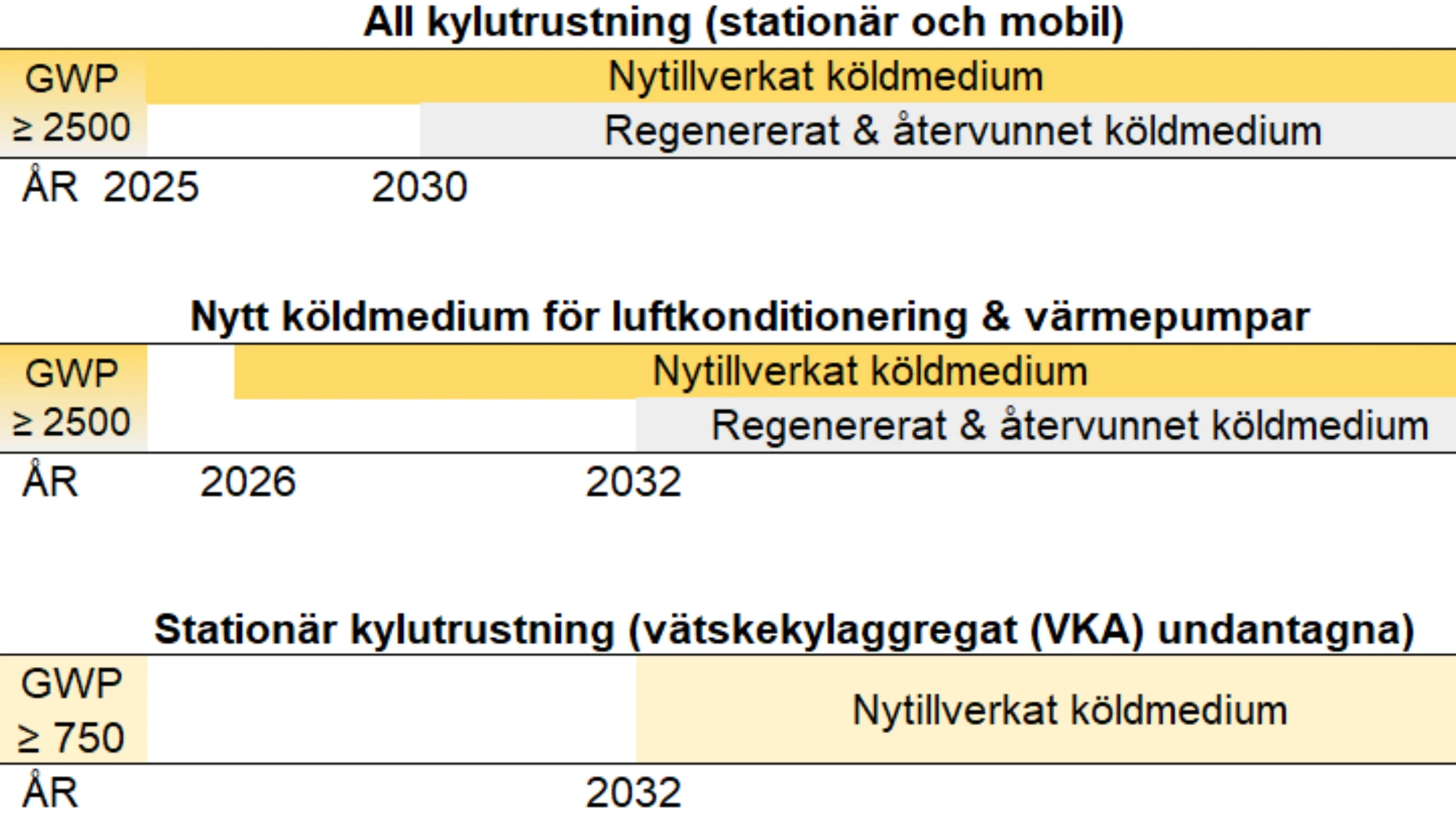
In 2024, we received a new F-gas regulation which means, among other things, that refrigerants with >2500 in GWP will be phased out. The consequence of this is that there is already a shortage of some refrigerants and in 2032 there will be a refill stop on refrigerants with >2500 in GWP.
Why is this important to know?
This is because you need a plan for the heat pumps you have so that you can avoid repairs that require refrigerant charges. This maintenance plan also means postponing investments in new heat pumps.
So what should you think about?
First and foremost, a heat pump should not work at too high temperatures. If you have both district heating and a heat pump, our recommendation is that you let the district heating handle the hot water production and then the heat pump does not have to work with high temperatures.
But won't it be more expensive to do so?
Depending on the contract you have, you can calculate whether it will be more expensive. Keep in mind that most district heating suppliers have a cheaper tariff in the summer. But by letting the district heating make hot water, the heat pump can rest in the summer and then you double the life of the heat pump.
Is there any other benefit?
When the heat pump takes a holiday in the summer, the boreholes are recharged and then the efficiency increases when you then run the heat pump during the heating season. According to a drilling company we spoke to, 9 out of 10 boreholes have poor flow and therefore it is good to recharge the boreholes in the summer.
Is there anything else you can do?
Last but not least, for a heat pump to last as long as possible, you need to have clean heating systems. By having clean heating systems, the heat pump can get rid of the heat in the right way. Delta-T between hot gas and condenser should not exceed 25 degrees!
Contact us when you need advice on heat pumps in your business!